UzhNU presented the international collective monograph “Languages and Cultures in Times of War”
Research collaboration brought together experts from ten countries to examine linguistic and sociocultural transformations amid Russia’s aggression against Ukraine
Uzhhorod National University hosted the presentation of the collective monograph “Languages and Cultures in Times of War,” created with contributions from 14 authors from ten countries: Ukraine, the United Kingdom, Germany, Hungary, Poland, Spain, Italy, Norway, Georgia and Canada. The volume was published under the auspices of the Research Centre for the Sociology of Language, founded at Uzhhorod University by Professor Halyna Shumytska.
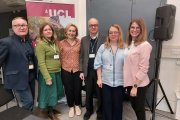
The monograph brings together papers presented at the international conference “Languages and Cultures in Times of War: the (Im)possible, the (Re)imagined, the (Un)managed,” organised by the School of Slavonic and East European Studies (SSEES) at University College London (UCL) in cooperation with Justus Liebig University Giessen (Germany), Uzhhorod National University (Ukraine) and the Ukrainian Catholic University (Ukraine) on 2–3 May 2024 in London. Around 60 scholars from 40 countries took part; the monograph itself comprises studies by 14 authors.
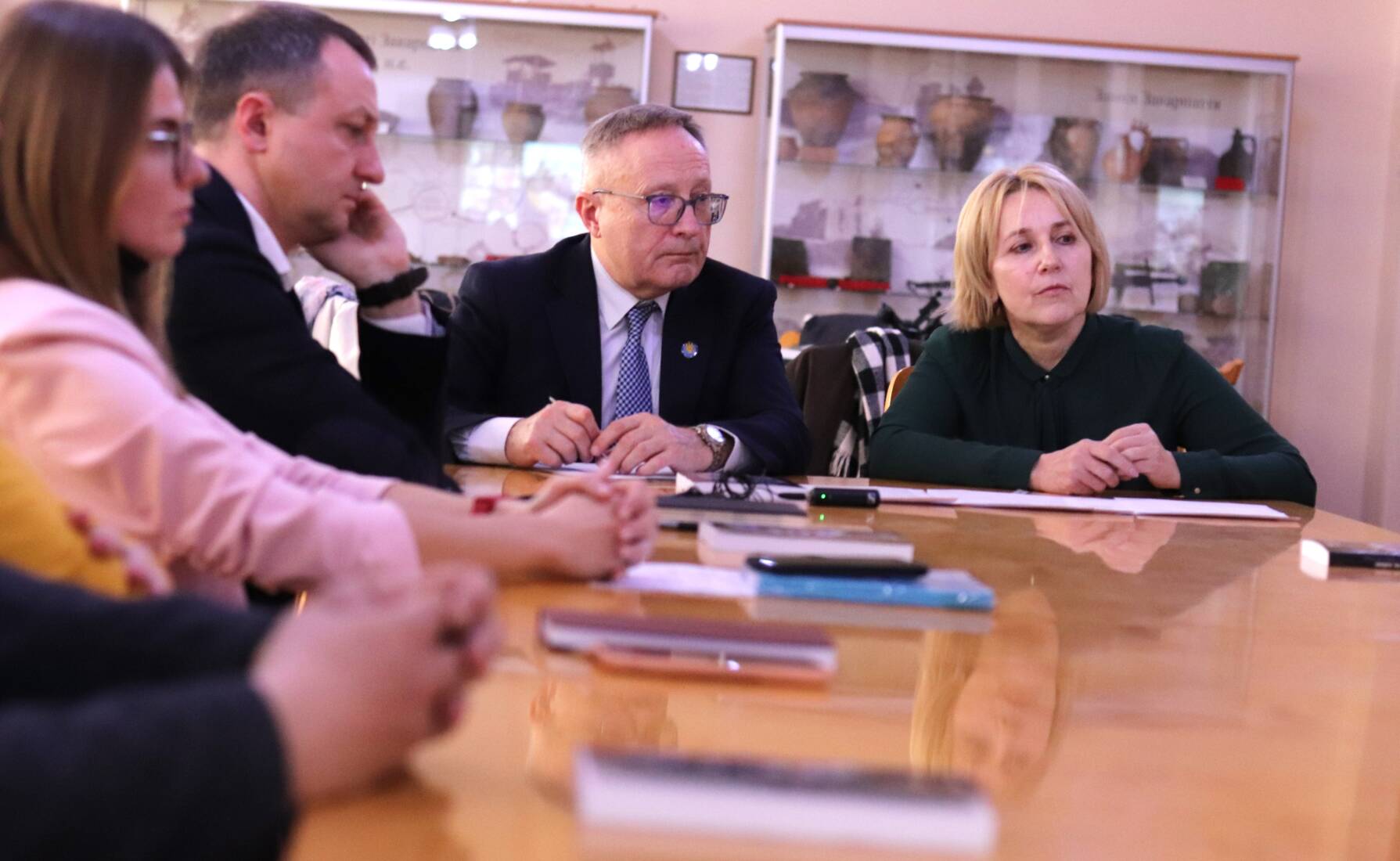
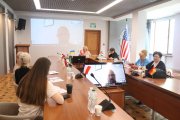
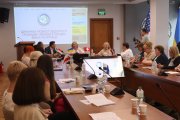
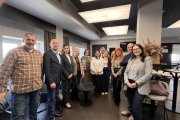
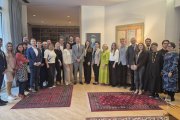
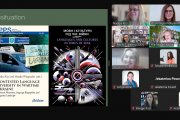
The presentation took place in the UzhNU Archaeological Museum in a hybrid format. It was moderated by Halyna Shumytska, head of the UzhNU Research Centre for the Sociology of Language, and Alex Krouglov, professor at the School of Slavonic and East European Studies, University College London — both co-authors and academic editors of the volume.
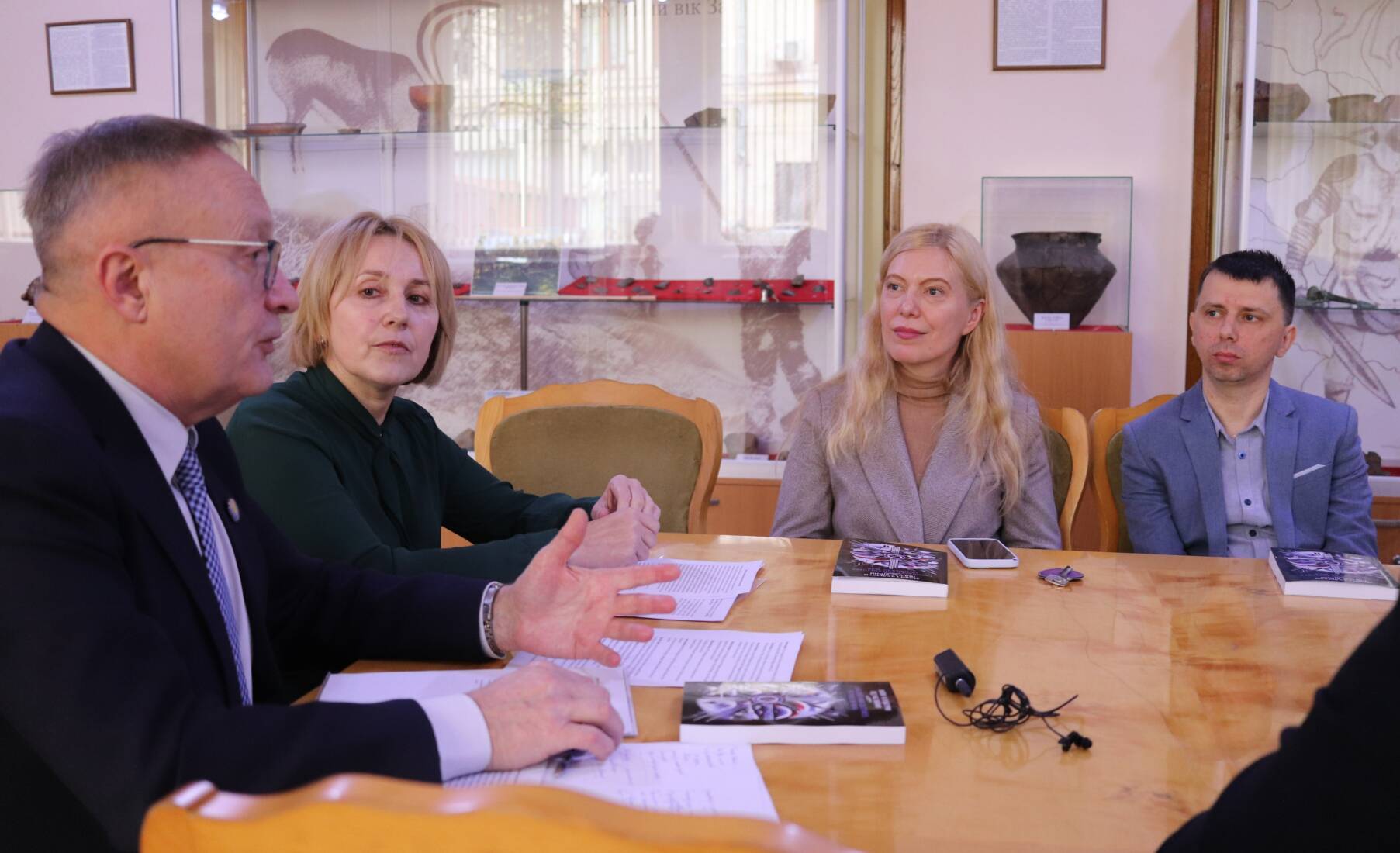
Myroslava Lendel, UzhNU Vice-Rector for Academic Affairs, welcomed participants: “This collective monograph is the fruit of work, research and discussions that unfolded in the Ukrainian scholarly community and European universities and were debated at the London conference. I reviewed the list of authors and the topics of the articles, and they are truly impressive. I am very glad that our university, in partnership with European institutions, brought together linguists, sociologists and journalists who examined, in ethnocultural and linguistic terms, how Ukrainian society — both inside the country and beyond its borders — can preserve, nurture and defend its language and culture, and even add new linguistic qualities.”
A significant role in publishing the monograph was played by Fedir Shandor, former head of UzhNU’s Department of Sociology and Social Work and now Ambassador Extraordinary and Plenipotentiary of Ukraine to Hungary, who was unable to attend the presentation. Together with Alex Krouglov he wrote the preface.

Alex Krouglov shared the story of the monograph — from the idea of the conference and the selection of participants to compiling and releasing the book. The volume was produced in a remarkably short time: eleven months. He then invited Dominic Ellington-Smith, Open Access Publications Manager at University College London, who presented the collective monograph already available in their repository. The work will also soon appear in Uzhhorod National University’s electronic collection.
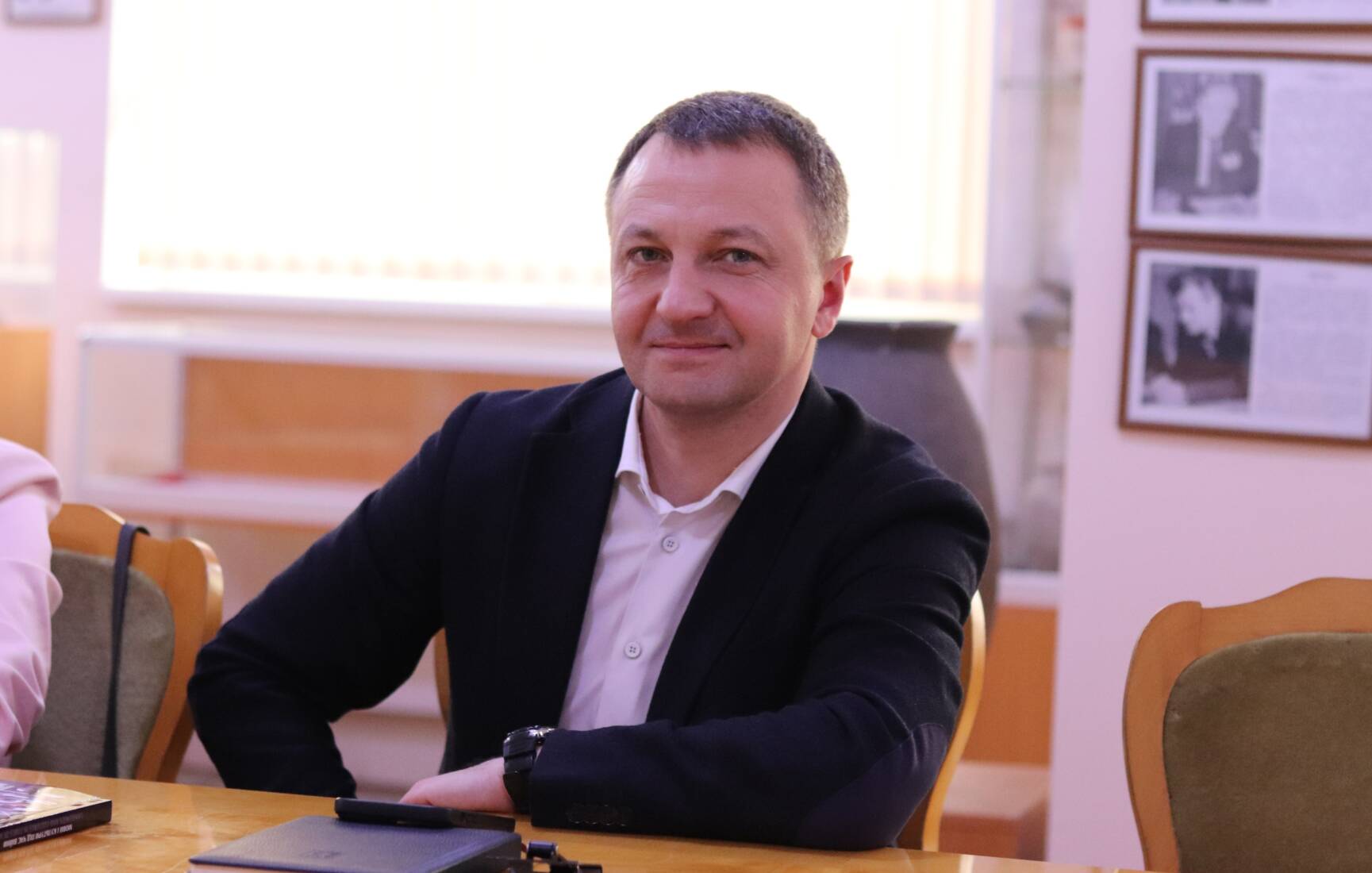
One of the volume’s authors is Taras Kremin, Commissioner for the Protection of the State Language: “This monograph can become a major foundation for stronger cooperation not only between Ukrainian and British universities, but also for further language practices concerning the status of national languages, oppressed languages, and languages showing signs of linguicide — especially during the Russo-Ukrainian war. Over these years we have made the state language effective. I am very glad this meeting is taking place in Uzhhorod. In my firm view, Transcarpathia is a region with the best language practices and results of their application in a polycultural, multi-ethnic, multilingual environment — on the border of different worlds, yet at the very centre of the European continent.”
Reviewers of the collective monograph include Professor Yurii Ostapets of Uzhhorod National University, Professor Svitlana Sokolova of the Institute of the Ukrainian Language of the National Academy of Sciences of Ukraine, Professor Myroslav Shkandrij of the University of Manitoba (Canada), and Professor Alessandro Achilli of the University of Cagliari (Italy).

Svitlana Sokolova noted in her remarks: “We have all become convinced that the war in Ukraine is a shared problem, not only a problem for Ukrainians. In this time we have gained valuable experience, learned a great deal that is new, and much has been learned about us. Many of our fellow citizens found themselves for the first time not only abroad but also in Ukraine’s western regions. Sadly, most had never travelled beyond their own locality and had little idea how we live here. People’s perception of language policy has changed radically. Over three years the language itself has also changed. It is very interesting that the monograph turned out to be multidimensional. It is a catalyst for everything now happening in our society.”

Layout and typesetting were handled by Vasyl Putrashyk, editor-in-chief of the UzhNU Media Center. The cover was designed by Martin Lesho, a master’s student at UzhNU’s Department of Sociology and Social Work. “From the cover you should first feel a dynamism that, through colour, resonates emotionally with the monograph’s title. There is nothing literal — no weapons or tanks. At the same time there is light at the bottom — a place for people. When shaping the cover we considered several options as a backdrop for the book’s contents. An important thought in choosing was that when someone sees the monograph on a shelf, they will first take it in visually and build their expectations of the content from that,” he said.

The floor was then given to co-authors. Dr Nadiya Kiss (University of Erfurt) thanked everyone involved and shared plans for future projects: “It is very important that this book was published in Ukraine. We show that culture matters in wartime. With such works we produce knowledge about Ukraine.”

Liudmyla Pidkuimukha, a postdoctoral researcher at Justus Liebig University Giessen (Germany), stressed: “In this Ukrainian–English monograph the Ukrainian texts are especially valuable to me. Ukrainian scholarship has finally reached a level where foreign researchers who do not know Ukrainian translate our academic articles with DeepL, Google Translate or ChatGPT. Whereas it used to be common to think that to be heard one must write only in English, we have now reached a point where we can write in Ukrainian. Our perspectives are valuable, needed and in demand in the global scholarly community.”
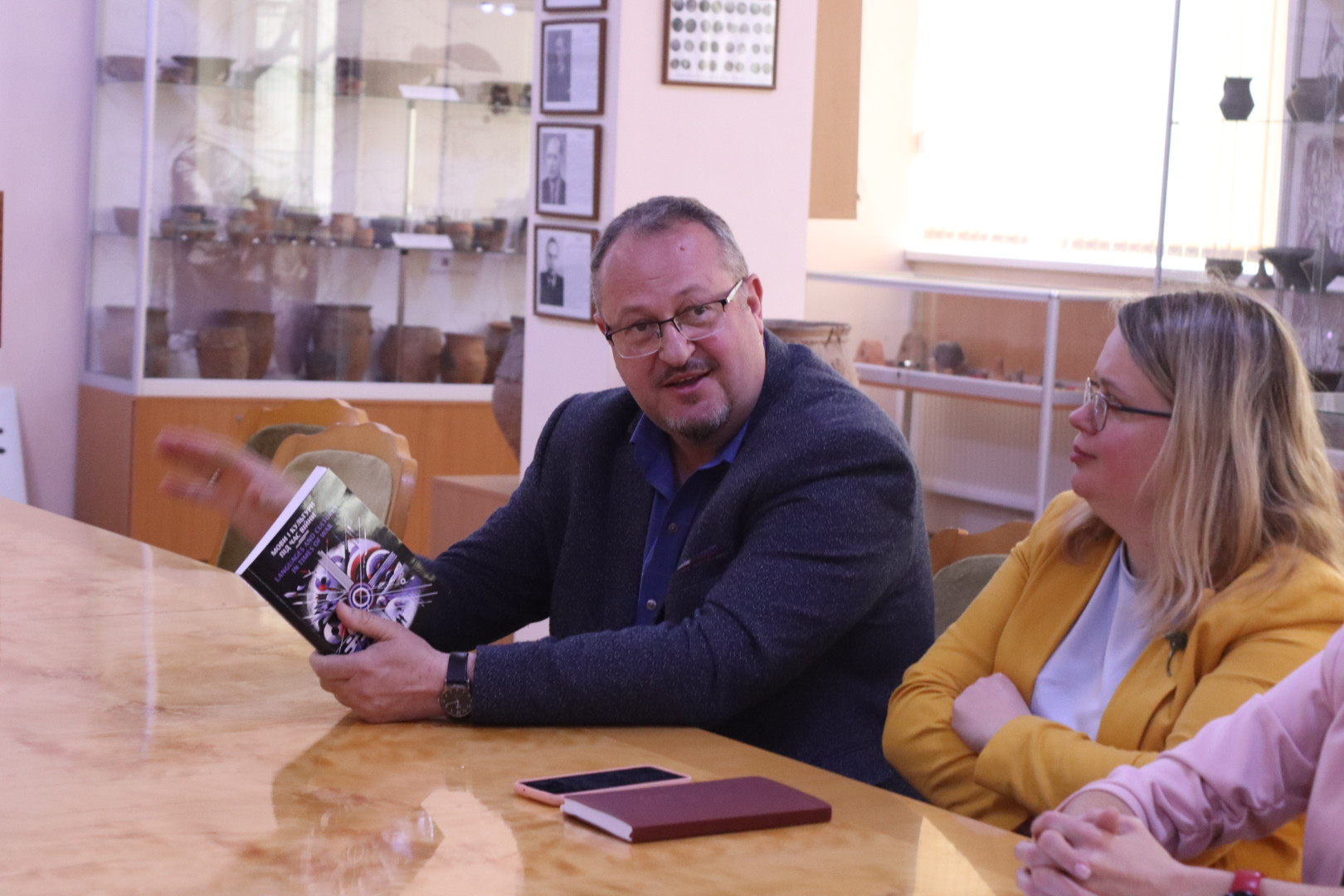
Professor Marian Tokar, director of UzhNU’s Institute of Political Regional Studies, emphasised the teamwork and thanked the organisers: “The choice of authors made it possible to open up a problem that is new for Europe and Ukraine — languages and cultures in war. This is what we feared, and hoped never to witness in our lifetime. Yet we are witnesses to these changes; we feel and record the impact of war on cultures and languages. So we should continue this cooperation and involve other authors in the research. The authors of this monograph confirm that we are not departing from the European integration course: we move toward it purposefully and consciously, and with good reason expect that through languages and cultures we will also be accepted politically into the family of European nations.”
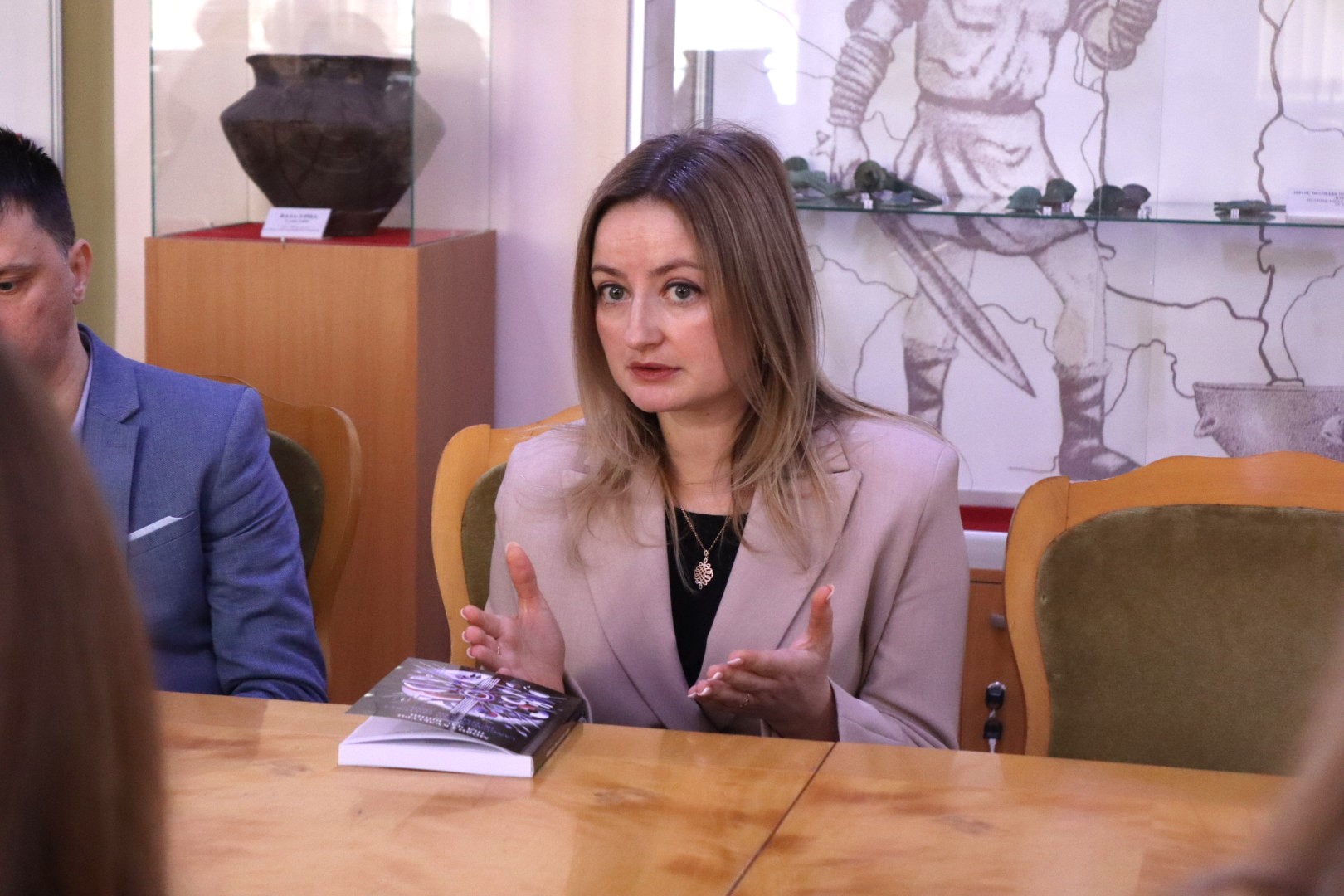
Oleksandra Oros, head of UzhNU’s Research Centre for the Study of Violence, shared a brief outline and practical findings of her study: “War creates conditions that make the use of aggression in communication and social interaction critical. We have long lived under existential danger, social uncertainty, without a planning horizon. Children suffer most. I consider joint learning for parents and children, especially in critical situations, the best toolkit. I see further research on this topic as highly promising.”
Another co-author, Professor Ingunn Lunde of the Department of Foreign Languages at the University of Bergen (Norway), spoke about how the full-scale war has affected Ukrainian studies and research in Norway. It was especially welcome that she spoke in excellent Ukrainian.
Adam Głaz, associate professor at the Department of Linguistics, Maria Curie-Skłodowska University in Lublin (Poland), also spoke in Ukrainian, sharing ideas on the development of the Ukrainian nation and ways to represent Ukraine better in the international community, including scholarly networks.
-
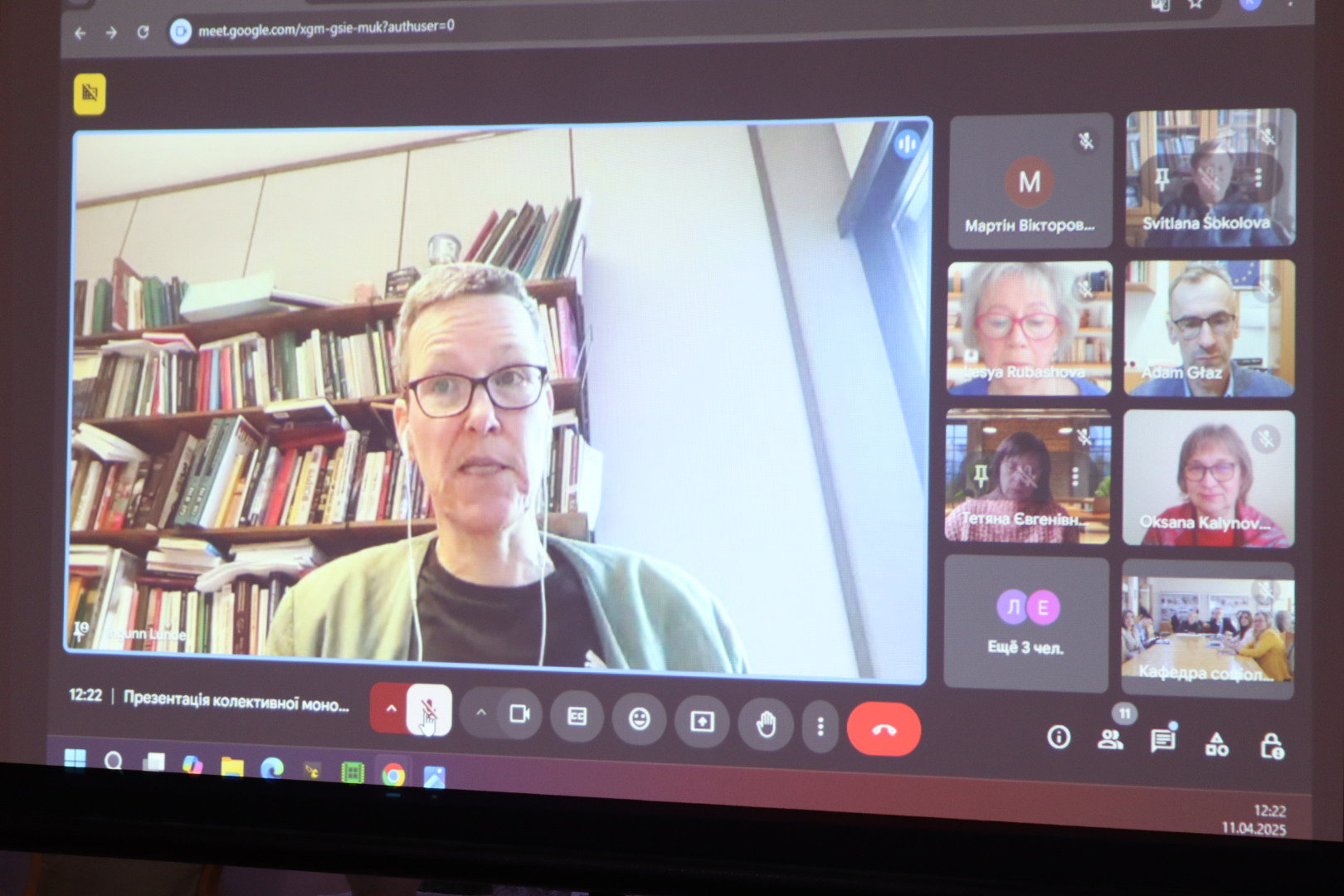
Ingunn Lunde
-
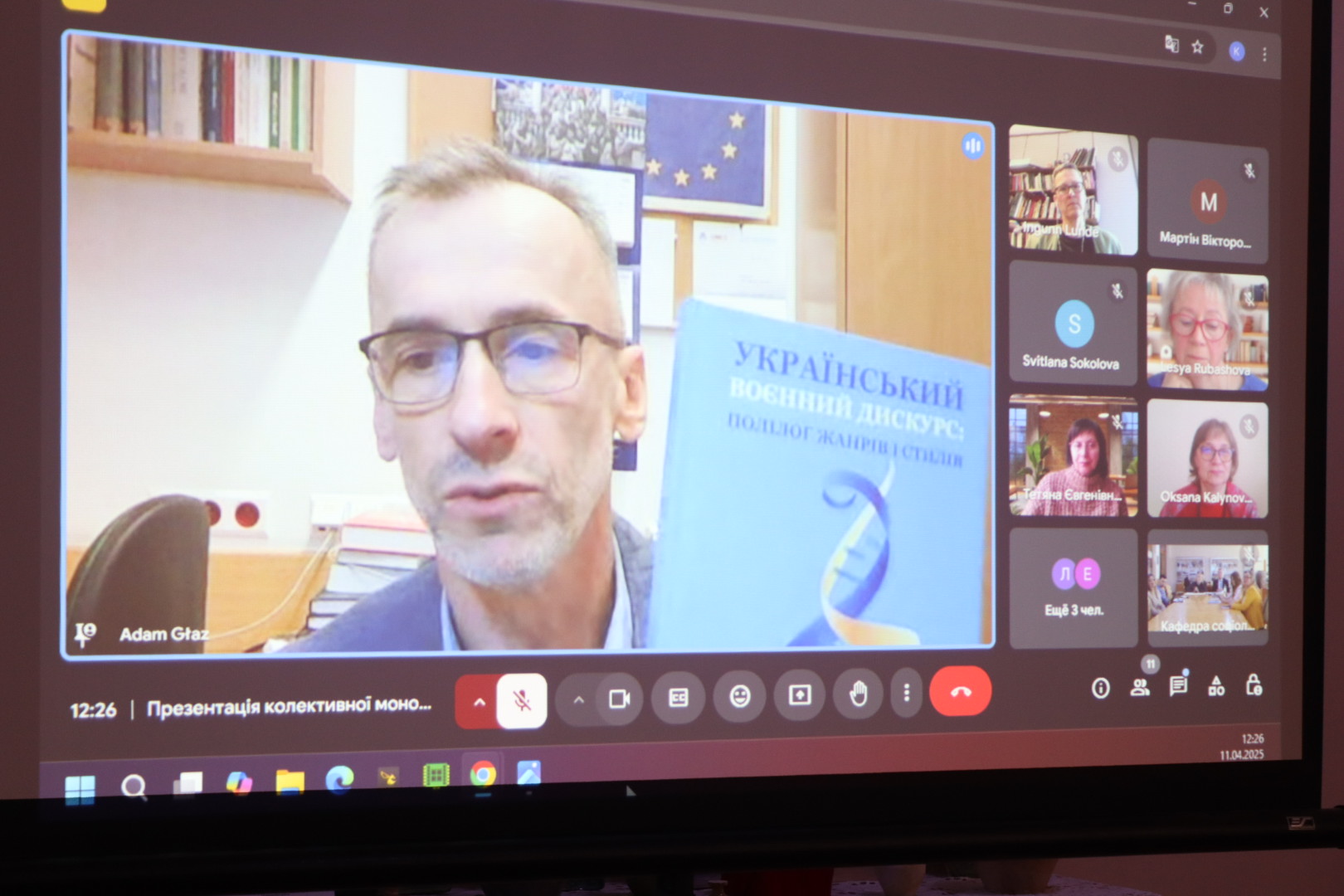
Adam Głaz
-
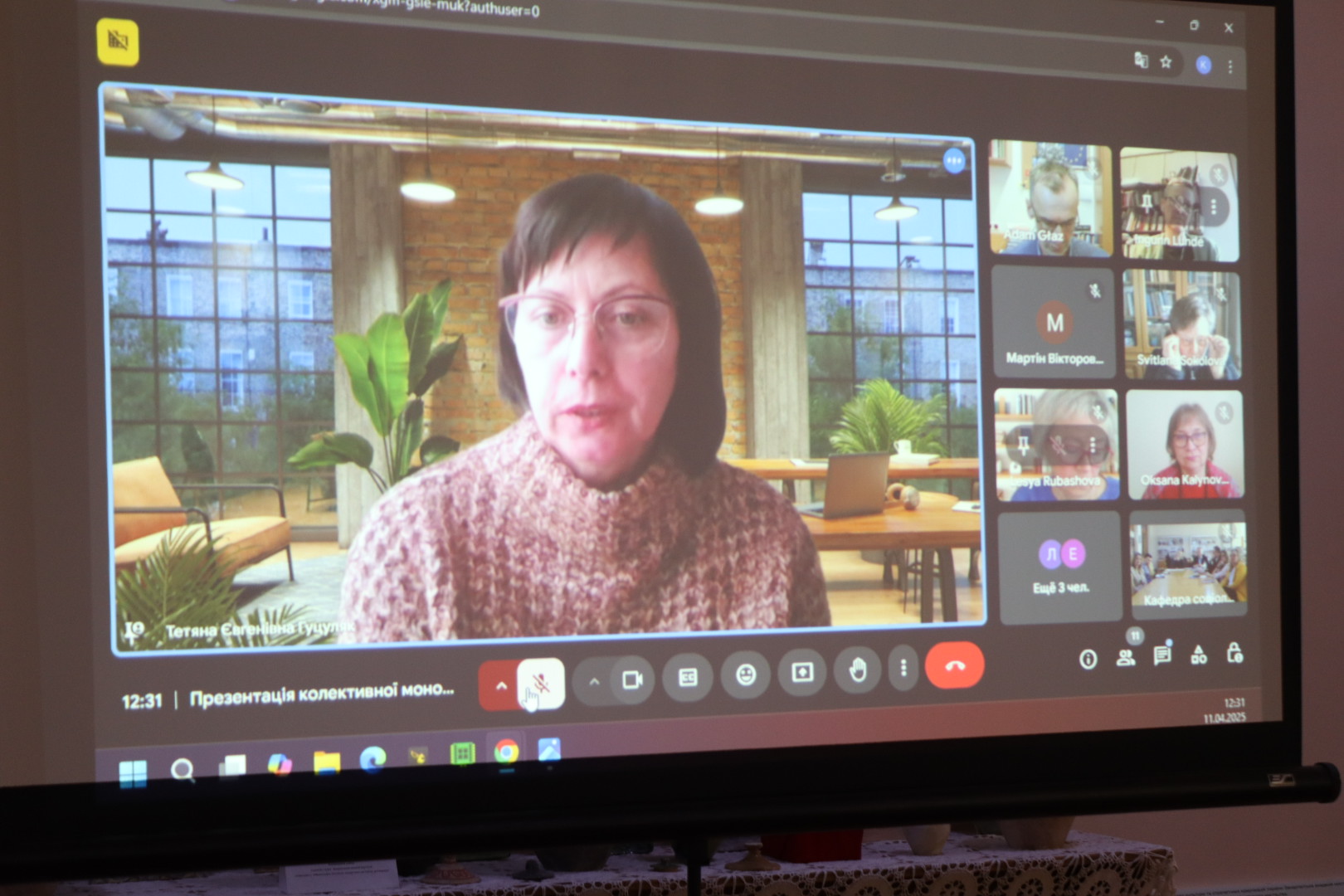
Tetiana Hutsuliak
-
Lesia Rubashova
Tetiana Hutsuliak, associate professor at the Department of Modern Ukrainian Language, Yuriy Fedkovych Chernivtsi National University, stressed: “Such a powerful factor as war affects every sphere of our life. But it has left an especially strong mark on our culture, language and social life. In the first days of the war people expressed themselves extraordinarily — emotionally and intellectually — at the linguistic level: language simply exploded with coinages and new shades of meaning in familiar words, both lexically and semantically. All of this spread so vividly that linguists have an enormous amount of work to preserve these changes for history.”
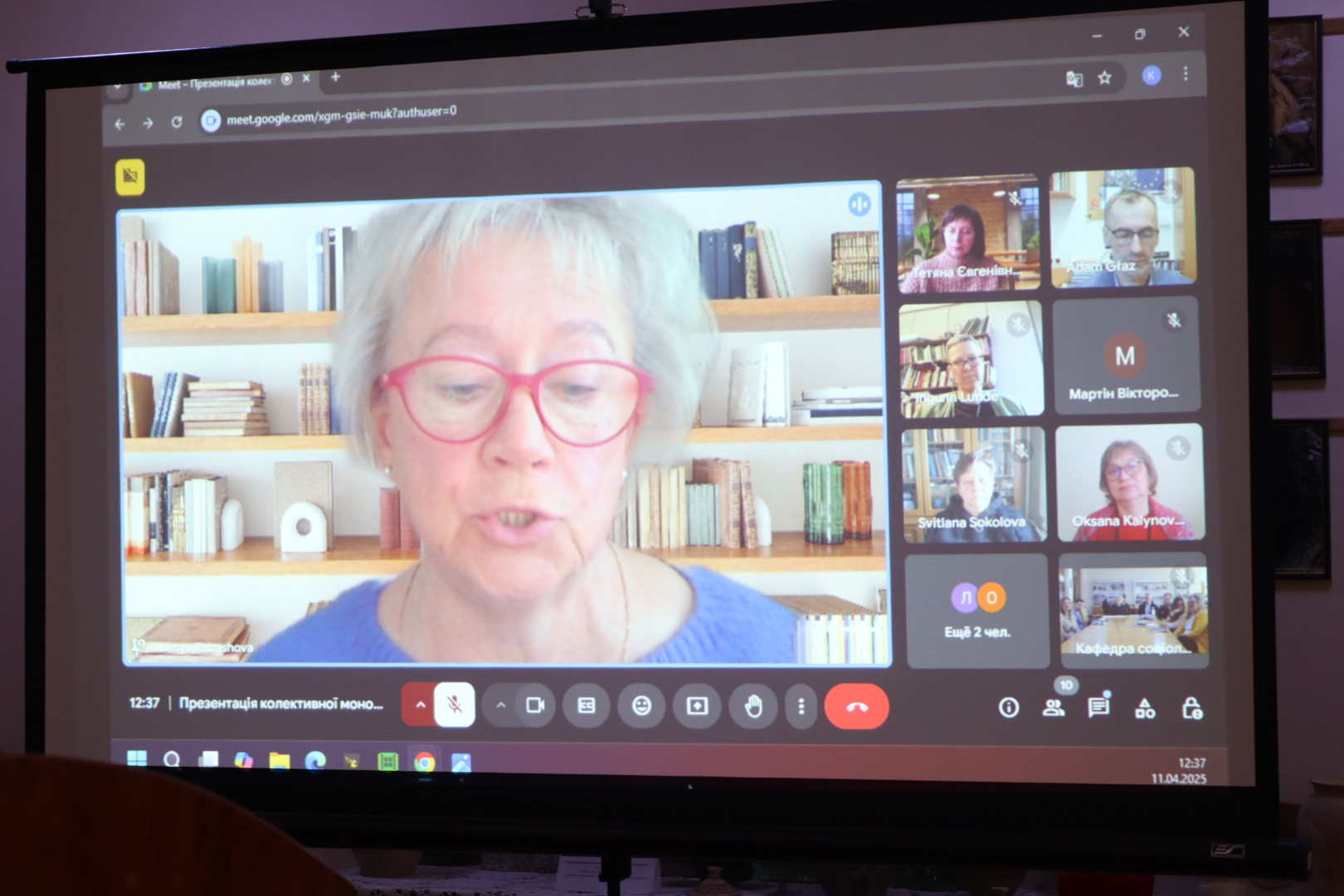
Lesia Rubashova, associate professor at the Centre for Scientific Research and Teaching of Foreign Languages of the National Academy of Sciences of Ukraine, analysed humour and laughter as a response to war, including in Ukrainian theatre productions.
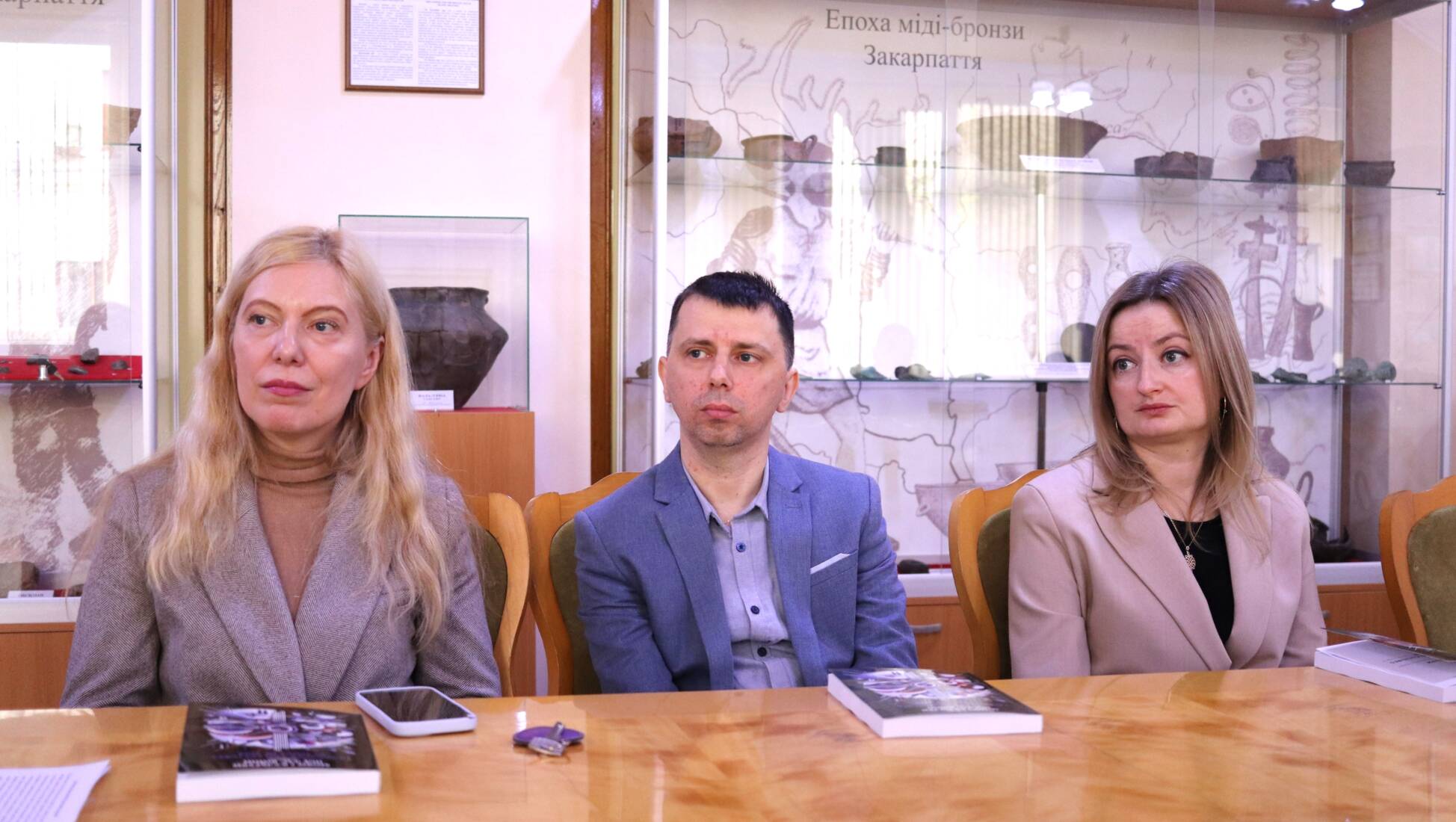
Dmytro Afanasiev, acting head of UzhNU’s Department of Sociology and Social Work, summed up the meeting: “This monograph contains interdisciplinary research at the intersection of many fields. Our department was created almost thirty years ago as an international project to launch social work. International contacts were a very strong part of the unit’s activity. Unfortunately, the COVID years and martial law minimised our ability to take part in such work. Yet thanks to leading scholars of the department, including Halyna Vasylivna Shumytska, who recently joined the team, the work continues.”
The collective monograph “Languages and Cultures in Times of War” shows that despite the fighting, the Ukrainian scholarly community not only continues active research but also deepens its integration into the global academic space.
Anastasiia Labyk
Source:
UzhNU Media Center
Other publications