Results published of a study on teaching Ukrainian as a foreign language, carried out at the UzhNU Research Centre for the Sociology of Language
The Ukrainian Institute has released the full analytical report “Teaching Ukrainian as a Foreign Language: State, Challenges and Needs” — a 2024–2026 study hosted by the UzhNU Research Centre for the Sociology of Language
The Ukrainian Institute has released the full text of the analytical report “Teaching Ukrainian as a Foreign Language: State, Challenges and Needs.” An international team carried out the study in 2024–2026 on the base of the Uzhhorod University Research Centre for the Sociology of Language, commissioned by the Institute. The Media Center has already covered the presentation of results on 7 October.
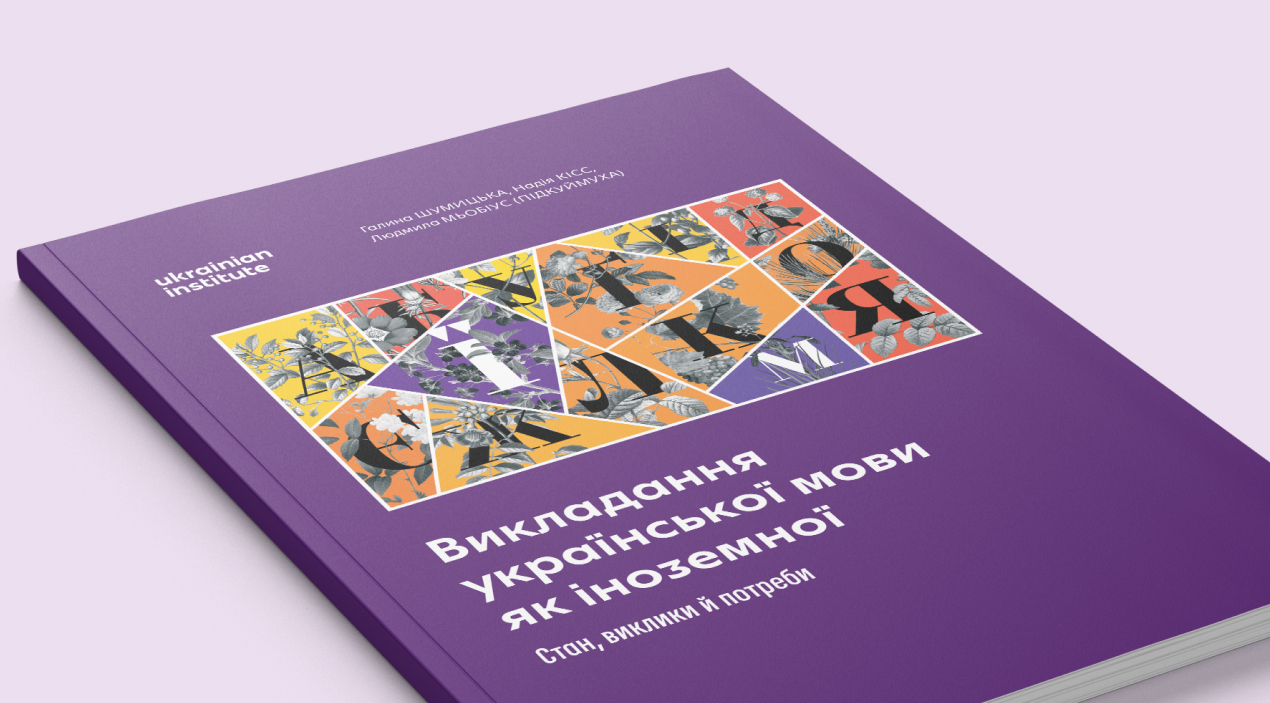
The report’s authors are UzhNU Professor and Centre Head Halyna Shumytska, and Drs Nadiya Kiss (University of Erfurt) and Liudmyla Möbius (Pidkuimukha) (Justus Liebig University Giessen). Interviews and focus groups were moderated by Halyna Chuba, Olena Pylypei, Tetiana Riezanova and Yuliia Nikolaienko. The project manager from the Ukrainian Institute was Olha Los.
The study covers Ukraine and three countries of the Institute’s priority geography — Germany, France and Poland. It draws on desk research, expert interviews with 48 respondents (15 in Ukraine, 33 abroad) and five focus groups with university students and course participants.
Key findings
- The audience has changed. Alongside international students seeking a diploma, an economically active adult community has emerged, mostly aged 31–50. The emotional solidarity surge of 2022 has given way to a pragmatic interest linked to Ukraine’s European integration and reconstruction.
- A regulatory breakthrough. In September 2024 the State Language Standard “Ukrainian as a Foreign Language. General Proficiency Levels A1–C2” was approved.
- Teaching resources are lacking. The shortfall covers complete course packages, materials for B2 and above and for professional groups, and textbooks adapted to speakers of specific languages. The network of centres for the state UAFL exam abroad is only taking shape.
- The field depends on short-term funding. Systemic support from the Ukrainian state is missing, so programmes risk being wound down. Russian in the everyday speech of some refugees is an added demotivating factor.
Findings on teaching Ukrainian as a foreign language in Germany, France and Poland are of particular interest; they also share several common tendencies:
- a strong demand to decolonise academic knowledge and to draw a clear line between Ukrainian studies and Russian studies;
- a shift in learners’ motivational profiles: the emotional solidarity impulse of 2022 has, over several years, become a pragmatic interest — the need to use the language through cooperation with Ukrainians, Ukraine’s prospective EU accession and future reconstruction;
- the prevalence of Russian in everyday communication among Ukrainian refugees as a demotivating factor;
- a shortage of teaching materials adapted to speakers of specific languages, stereotypes in existing textbooks and a lack of regional linguistic diversity; high textbook prices and scarce materials for advanced levels and specialised professional courses;
- the absence of a state UAFL examination system, which lowers the language’s prestige and blocks state-certificate proof of proficiency for professional needs;
- horizontal networking among UAFL teachers as the main driver of the field (cooperation levels differ across the countries studied);
- the risk of programmes closing and of losing accumulated expertise because of insufficient Ukrainian state support for UAFL lectureships abroad;
- blurring of the boundary between Ukrainian as a foreign language and as a heritage language amid large-scale Ukrainian migration.
To secure institutional sustainability and the quality of Ukrainian language studies, the authors propose a package of measures for different types of actors — from recommendations for state bodies to steps that universities, NGOs and individuals can take.
Among the recommendations: state funding for lectureships abroad; international certification; integrating Ukrainian into school curricula in European countries; nationally oriented textbooks (“Ukrainian for German speakers,” “for French speakers,” “for Polish speakers”); formalising professional networks; and a single digital platform for teaching materials.
The study is available on the Ukrainian Institute page, including as a PDF.
Research Centre for the Sociology of Language
Source:
UzhNU Media Center
Other publications